
Hey gang,
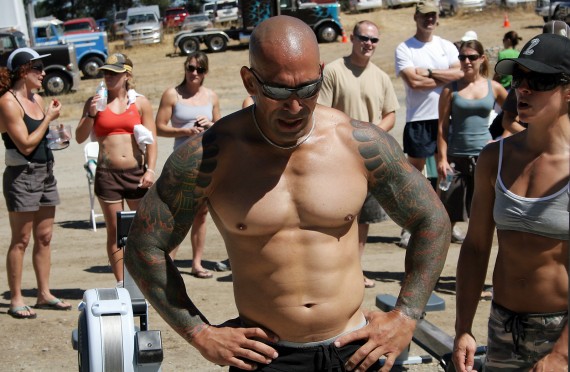
This blog is taken from Freddy Camacho’s personal blog site. Freddy has been around the CrossFit game for a long time and has some good insights as a coach, philosopher, and athlete. He’s qualified for the Games in the Master’s division so he’s the real deal. Give it a read and let us know your thoughts.
Turts.
Want to Be a Better CrossFit Athlete?
By Freddy Camacho | Athlete and Owner of CrossFit One World
When it comes to CrossFit as a competition, I can give you an edge over the other competitors. This is a simple tip. I won’t even charge you for it, even though you will start performing better. It doesn’t involve a super secret training regimen. It’s not a crazy concoction of supplements that will give you superhuman strength. It definitely does not involve you following a strict nutrition plan. I can assure you that it isn’t performing multiple workouts in a day.
You gain a competitive edge by simply training with integrity in your movement. It’s simple really. What does it matter if you “kill” a workout, but your range of motion within that workout was half ass? Think about what I am saying here. Do you have a Facebook account? Do you check the comments section on www.crossfit.com? Everyone and their mother posts these outrageous workout results. Where are they when competition time comes around? Most are wondering why they can murder “Fran”, but their judge keeps “no repping” them and they are at the bottom of the pack.
Here are some simple tips to be better at performing full range of motion movement within your workout:
1. Know what “full range of motion” means. Learn that first, then finish reading the rest of this post.
2. Concentrate more. Stop getting WOD drunk. Slow down a bit in your training and pay closer attention to your movement. Remember that you have to walk before you can run.
3. Have someone watch your movement and call you out on it when you suck. Make sure that you get someone who isn’t afraid to tell you that you suck. Make sure that you can handle being told that you suck. If you can’t handle being told you suck, you suck so please don’t compete.
4. Buy a cheap video camera and film your workouts. I train a lot by myself, so I do this all the time. It’s eye opening to watch your workout after you are done. I always armchair quarterback myself. It’s a great way to see your movement, and it’s an even better way to learn about what you are and are not capable of when you start to fatigue. This is one of the ways I learned how to more efficiently strategize my workouts.
5. Don’t try and PR every workout, and don’t treat every workout like it is a competition. I’m not saying that you should NEVER go balls to the wall, I am just saying don’t do it day in and day out. Not only will your movement get better, you’ll be less prone to injury. It’s also an easy way to avoid CrossFit burnout. Yes, there is such a thing as CrossFit burnout. If you haven’t experienced it yet, you haven’t been CrossFitting that long!
Today’s Workout
Buy-in: Athlete’s Choice – Front Squat or Back Squat – 10 x 2
- 15 min time limit – 2 warm-up sets then build quickly to around 75-80% of your 1RM and hold it there
- focus on vertical torso, pushing knees out to the sides and speed out of the bottom
WOD: “Rambunctious”
This wod will play with your mind a bit and adds up faster than you think. The full wod gives you 90 pullups and 90 reps of combined box jumps and du’s. Get your dancing shoes on gang!
Rx – For time:
- 21-15-9 rep rounds of pullups and box jumps (20/24) followed immediately by
- 21-15-9 rep rounds of pullups and double unders
- you get one time score – go immediately from 9 box jumps into the next 21 pullups
Zone 3 – choose one of the 21-15-9 combos
Zone 2 – choose one of the 21-15-9 combos, scaling pullups and box jumps/du’s (2x single skips)
Zone 1 – scale as needed
Cash-Out: Easy block run as a group (if not raining)
crossfit’s focus on “intensity” and “for time” workouts really is a double-edged sword – it helps make work output quantifiable but also encourages an obsession with comparing our times to others and cutting corners to shave seconds off.
any of us (myself included) who have decided to take the sport of crossfit seriously are guilty of what freddy describes… becoming slaves to the clock and letting way too many sloppy reps pass in the process. but learning this is not the way to train is critical before real progress can be made.
what the piece brings to mind for me is the distinction between “training” and “testing” which OPT has taught me. testing looks more like what appears on .com everyday, the “five rounds for time” kind of wod (though whether some of these are appropriate tests is a whole other debate). training, by contrast, involves perfect reps, technique, and the development of skills and different energy pathways. proper training focuses on much more than the clock; faster reps are not the same as better reps.
train with integrity and when the test comes around you will be ready.
Well said, Mike.
It is a tough balance to strike. To compete in CrossFit, I think it is important to be able to truly “go all out.” You need to know what this feels like and how to survive it. Unfortunately, experiencing that feeling too often will lead to burnout.
Of course, if the quality of movement is not present, then by going faster you are just practicing bad movements quickly. Fail.
Good food for thought Cam!
Quality reps and slowing down require us to leave our ego’s at the door…
Crossfit isn’t my #1 priority but I’m guilty of rushing through workouts, for sure.
“Make sure that you get someone who isn’t afraid to tell you that you suck. Make sure that you can handle being told that you suck. If you can’t handle being told you suck, you suck so please don’t compete.”
…interesting approach, although I think its very important to be corrected and to take criticism, there is something to be said for constructive criticism, so thanks to our coaches for not telling us we suck!?
Well said Mike.
I feel like the longer you crossfit the better you get at the so called “double edged sword”. I know that I still fall victim to shatty reps and clock racing too much but also know that as time goes on I gain more crossfit maturity. I listen to my body more, scale workouts more, and consciously try and hit full range of motion more.
Love the “training” vs “testing” Mike! Great way to put it!
I think we’re more able to focus on “training” when we’re focused on our long term goals (& long term gains). If we’re willing to sacrifice a few seconds off the clock or a few lbs/reps here and there in the “testing” then we can make those improvements and gain strength & technique. But it’s so easy to get distracted by our short term goals (being faster, beating old times/someone else) and not be able to see the bigger picture…
Charly you’re right. Some people (aka little gymnasts in Russia) may respond well to being told they suck but I like that Crossfit is about developing happy & healthy people in all aspects of life. So happy we have so many awesome coaches 🙂 Thanks guys!
Good points all round…
Definitely there is an interaction with training frequency and training goals that plays into the “train” vs “test” discussion.
If someone is training 2-3x a week with Crossfit as their main (or only) form of exercise, the “test” type of approach might net them the best gains in terms of fitness and health (given a reasonably solid foundation of quality movement). Intensity is a necessary part of the equation when frequency and duration of exercise are fairly low.
Once the session #’s increase though (as is the case with some of our Games-bound athletes – 7-10 sessions+/wk is pretty common) then the balance must shifted and intensities of effort varied. Skill-driven sessions should be executed with minimal fatigue, strength and power sessions should contain more rest and be more targeted, and conditioning sessions should take the form of intervals or measured efforts of 80, 90, and 95%
The influence of OPT’s approach to training has been strong on me in terms of the programming I do both inside and outside of the Zone. Working with the goals of maintaining power output through intervals and skill circuits has added a new dimension to my prep.
I do find though that there is nothing that prepares me for the “push” of competition like doing wods at full effort in the Zone environment. I just have to be careful that I don’t overdo that as it is easy for me to get caught up in trying to beat the best scores.
I find I can tolerate only 2 or maybe 3 sessions per week at close to 100% output (this depends a lot on the content of the sessions though)… but that is against the backdrop of a weekly training count of 8-10 sessions.
Moving forward with our programming there will be changes that emerge but I feel the “test” part of the crossfit formula will always be a large component of our program. I don’t know exactly what the future will hold but only that we’ll keep getting better at being at the forefront of total fitness training!
turts
wow, that Freddy guy is in the masters?… that’s how I want to look when I get that old… heck, that’s how I want to look right now!
yeah cam, very true that the role of testers changes depending on who we’re talking about. the power of the crossfit method as a minimum investment/maximum return s&C program is evidenced by those who come 3x/week, hit the wod, and see great results. i guess the only potential problem is where the long metcons become the only thing people are doing, without becoming better athletes, especially once they learn how to truly “go all out”.
for this reason i think the coach rut MEBB approach (http://www.bootcampfitnesskc.com/the-fitness-conduit/) is one of the best ways to approach the 3x/week type crowd – planned, focused strength development (which i think can and should include bodyweight movements like strict pullups) with a more random metcon. which, i should add, looks a lot like what is posted as the zone wod more often than not!
Thanks Mike! I think separating the training and th testing really helps with preventing the Crossfit burnout!
Interestingly enough, I didn’t actually read this post until just now. Yet this afternoon when I was doing the Buy-In on my own, I decided it was high time to check my form and videotape myself doing my squats. As a busy Coach these days, I find that I ardly get to WOD in a class where I can be “coached” as I work out. So I figured it was a good idea to double check the integrity of my reps on my own, and make sure my form was in good shape. Each successive clip helped me for sure, and I was pleasantly surprised by my final weight result after making adjustments.
I really agree with taking the time to make sure that quality of movement comes before speed, especially after my Sectionals experience. I might move more slowly, but at least I’m getting stronger and better as I do! 🙂
There is certainly a great deal to know about this issue.
I like all the points you have made.